The Cost of Waiting on Foundation Repair in Fort Collins
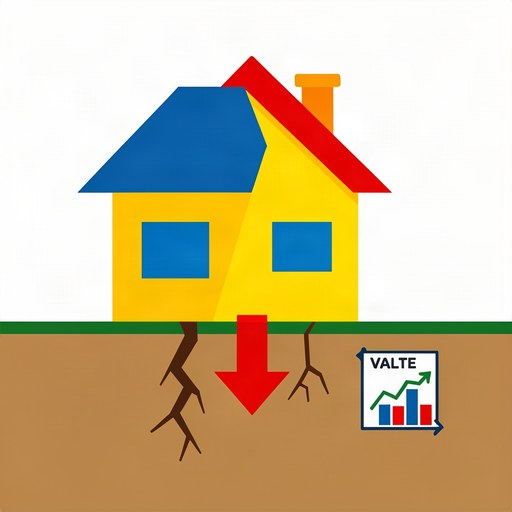
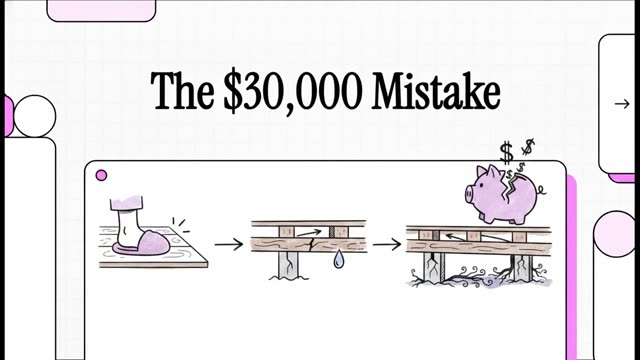
A door that drags on the carpet reads as a quirk, not a bill. Structurally it is the visible end of a load path that has already shifted: a support settles a fraction of an inch, the floor plane drops, the frame racks, and a rectangular opening becomes a parallelogram. The reason that matters financially is not the door. Foundation failure is progressive, and the published price of the fix moves by an order of magnitude as damage spreads from targeted support into beam replacement and full underpinning. State geological mapping records a related pattern: lightly loaded home foundations sustain the highest damage rates.
How the price actually escalates
In the early phase, movement is local and the fix is local: adjust or replace a few supports under one bay, correct the drainage that caused the wetting, and the job sits at the low end of the published bands. In the middle phase, settling has spread across more than one bay, beams are deflecting, and rigid drywall tears at door and window corners because it cannot flex; now the scope includes multiple supports and framing repair. In the late phase, rotted or crushed members must be replaced rather than reinforced, floor planes are significantly displaced, and rigid plumbing lines under the floor come under stress and can rupture, adding water damage to a structural bill. That is where quotes reach the top of the ranges and full replacement becomes an option. Published national benchmarks across HomeAdvisor, Angi, Fixr and Thumbtack: crack sealing at $250–$800, settling and sinking repair at $5,000–$25,000, underpinning at $10,000–$40,000, piers at $1,000–$3,000 each installed, and full foundation replacement at $20,000–$100,000.
| Phase | What is happening | Published cost band |
|---|---|---|
| Early: local movement | One bay settling; a door that sticks in one season; first fungal staining | Crack sealing $250–$800; targeted support at the low end of the pier range |
| Middle: spreading | Beams sagging across bays; diagonal cracks at openings; visible deflection | Settling and sinking repair $5,000–$25,000 |
| Late: structural | Members crushed or rotted and replaced; displacement; stressed plumbing | Underpinning $10,000–$40,000; replacement $20,000–$100,000 |
| All phases | Per-pier work, the unit that drives most totals | $1,000–$3,000 per pier, count set by engineering |
Why Fort Collins homes move in two seasons
The Colorado Geological Survey calls expansive or swelling soil the state's most significant geologic hazard, causing more property damage than any other natural hazard. State planning guidance records that about 50% of Colorado soil has a high or very high shrink-swell potential, expanding 10% or more by volume as it wets, with swelling pressures up to 30,000 pounds per square foot — forces that exceed the design strength of a typical residential footing. Fort Collins sits inside the mapped corridor: the Front Range Urban Corridor runs from Fort Collins and Greeley south to Pueblo and Canon City and includes more than 80% of Colorado's population, and the local Nunn series, whose type location is in Larimer County, is a fine, smectitic clay loam with 35–50% clay described in the subsoil as firm, very sticky and very plastic. CGS notes swelling soils sit at a stable, relatively dry moisture content until construction disturbs them, and frequently never return to that dryness. Frost supplies the second cycle: Larimer County's frost line is 30 inches, and the county explains that an unheated structure lets frost force move horizontally below the foundation while a heated structure forces it upward into heave. The result is shrinkage settlement in a dry summer and frost heave at the same footing in winter — two repair cycles if neither is addressed.
| Damage type | Published range | Typical trigger in Fort Collins |
|---|---|---|
| Cracking | $250–$800; epoxy injection $200–$1,000 | Seasonal shrink-swell and frost movement |
| Settling or sinking | $5,000–$25,000 | Dry-season clay shrinkage under a footing |
| Bowing walls | $4,000–$12,000; $4,000–$15,000 where hydrostatic | Swelling backfill and water against a basement wall |
| Wall reinforcement | Carbon fibre or steel strips $4,000–$12,000; tiebacks $5,000–$15,000 | Inward movement of a block or concrete wall |
What the diagnosis costs, and why it is the cheapest money in the project
Published guides price diagnosis separately from repair, and it is two orders of magnitude smaller. A structural engineer's inspection and report runs $340–$780 from HomeAdvisor, $566–$1,650 nationally from Thumbtack, or $300–$1,000 as a structural report from Angi. A soil or geotechnical report runs $500–$3,000 from Angi and $1,000–$5,000 from Fixr. They are not the same product: the structural report evaluates the building, the geotechnical report evaluates the ground, and on Front Range swelling clay the second is what tells you how deep the fix must go. That matters here because Larimer County already treats it as standard practice — the county's street standards, adopted by the city as well, require geotechnical reports on covered projects and include a dedicated swell-mitigation section. Permit costs are close to a rounding error but matter for documentation: Fort Collins collects plan review on work valued over $3,000 at $1 per $1,000 of valuation, charges $150 for a residential foundation and framing permit, and issues permits valid 180 days.
| Line item | Published figure | Source |
|---|---|---|
| Structural engineer inspection and report | $340–$780; $566–$1,650 national range | HomeAdvisor / Thumbtack |
| Soil / geotechnical report | $500–$3,000; $1,000–$5,000 second guide | Angi / Fixr |
| Fort Collins plan review | $1 per $1,000 of valuation on work over $3,000 | City of Fort Collins |
| Fort Collins residential foundation and framing permit | $150; valid 180 days | City of Fort Collins |
| Home improvement loan APR context | About 7% to 36% APR | Bankrate |
What delay costs beyond the repair
The second bill arrives at resale and at inspection. Colorado requires sellers and brokers to disclose adverse material facts actually known to them, and the Colorado Lawyer's treatment of that duty names structural issues among the examples, with the Seller's Property Disclosure form (SPD19) used with the state's standard contract forms. Larimer County's inspection process raises the documentary bar further: engineer's letters on footings, foundation and perimeter drain must be on site for the inspector, caissons must be inspected by the engineer of record with a wet-stamped approval letter, and temporary certificates of occupancy cost $600 for 180 days. The financial read is asymmetric. HomeAdvisor's guide notes that documentation showing a structure was properly stabilised, especially with piers in regions known for shifting soil, often reads as a plus rather than a problem, while skipping repairs can cut sale price and shrink the buyer pool. At roughly 36% APR, the top of the published band, a $10,000 loan costs far more in interest than the same principal near 7%.
| Consequence | What changes | Who pays |
|---|---|---|
| Disclosure | Adverse material facts must be disclosed; structural issues are named examples | Seller |
| Inspection evidence | Engineer's letters required on site; caisson approval wet-stamped | Owner / contractor |
| Buyer pool | Skipped repairs can cut sale price and shrink the pool of interested buyers | Seller |
| Financing | About 7%–36% APR band; the spread can exceed the gap between two bids | Owner financing the work |
If the budget only stretches so far this year, sequence by mechanism rather than by price. Grade, gutters and downspout extensions come first because they are the cheapest items that address the water that drives movement. An engineer's report comes second, because it converts symptoms into a scorable scope. Stabilisation comes third, and does not improve by waiting: pier work is priced per pier at $1,000–$3,000 installed, and the count is an engineering output, not a discount lever. Moisture management and encapsulation come last, so they protect repaired wood rather than covering damaged members. Do not postpone the diagnosis while paying for cosmetics: crack sealing at $250–$800 improves appearance and nothing else.
Planning only — have a licensed professional engineer evaluate your foundation. A professional engineer must be licensed in Colorado for work here; the engineer's letter is also what the county inspector asks to see.
Sources
- HomeAdvisor, How Much Does Foundation Repair Cost in 2026: https://www.homeadvisor.com/cost/foundations/repair-a-foundation/
- Angi, How Much Does Foundation Repair Cost (2026 data): https://www.angi.com/articles/how-much-does-foundation-repair-cost.htm
- Fixr, How Much Does It Cost to Repair a Foundation in 2026: https://www.fixr.com/costs/repair-foundation
- Thumbtack, How much do foundation repairs cost: https://www.thumbtack.com/p/foundation-repair-cost
- Bankrate, home improvement loan rates: https://www.bankrate.com/home-equity/home-improvement-loan-rates/
- Colorado Geological Survey, Expansive Soil and Rock: https://coloradogeologicalsurvey.org/hazards/expansive-soil-rock/
- Larimer County Urban Area Street Standards, Chapter 5 — Soils Investigations: https://larimer.gov/sites/default/files/uploads/2021/ch05_-_soils_investigations_and_reports_0.pdf
- The Colorado Lawyer, Disclosure of Adverse Material Facts and Latent Defects (July/August 2024): https://cl.cobar.org/features/disclosure-of-adverse-material-facts-and-latent-defects-in-real-estate-transactions/