Crawl Space Wiring in Fort Collins: Condensation, Frost and the Code
There is a version of this story that circulates widely and it is not quite right. Standard white non-metallic (NM) cable is not automatically illegal simply because it runs beneath a house. The National Electrical Code both permits NM cable in crawl spaces under conditions and prohibits it in wet or damp locations, and those two provisions are what a homeowner has to reconcile. Section 334.15(C) addresses unfinished basements and crawl spaces directly, allowing cable run at angles with joists to be secured to the lower edges of joists above a minimum conductor size, with smaller cables run through bored holes or on running boards. Section 334.12(B)(4) prohibits Type NM and NMS cable in wet or damp locations. Whether your crawl space is a damp location is the question — and a Larimer County crawl space that sees condensation in summer and frost in winter is a candidate.
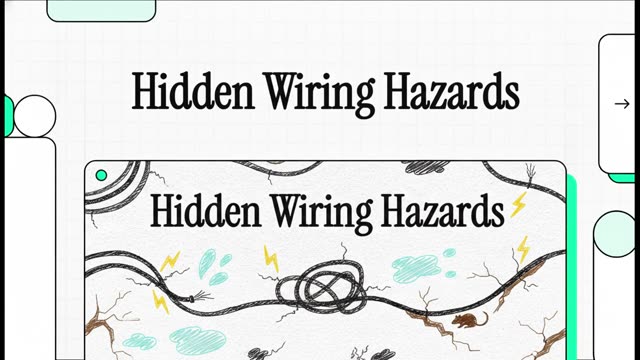
What the code prohibits, permits, and leaves to judgement
The NEC defines the terms, and the prohibition is written in those terms. A wet location is subject to saturation or in direct contact with earth; a damp location is protected from weather but subject to moderate degrees of moisture, with some basements given as an example. An Indiana state interpretation of the identical provision, written when the same question arose for exterior cavity walls, explains the reasoning: the code looks only at the environment of the cable itself, and the prohibition is not meant to fire where moisture appears only because another component failed. Applied to a crawl space, that logic means a dry, drained, vapour-barriered space is defensible and a wet one is not. Type NMC cable, whose jacket is corrosion-resistant, is permitted in dry, moist, damp and corrosive locations, which is why it appears in compliant crawl space work.
| Cable or condition | Code position | What it means below the floor |
|---|---|---|
| NM cable in a dry crawl space | Permitted under 334.15(C) with joist or running-board conditions | Legal if the space is genuinely dry and support rules are met |
| NM cable in a damp location | Prohibited by 334.12(B)(4) | Condensation or wet soil makes it a violation |
| Type NMC (corrosion-resistant jacket) | Permitted in dry, moist, damp and corrosive locations | The compliant choice where moisture cannot be removed |
| Splices and junction boxes | Must be accessible and covered | Taped and buried is a defect, not a shortcut |
| Knob-and-tube under wet insulation | Not permitted where the design relies on air cooling | Serious hazard in older housing stock |
The failure chain, and why rodents accelerate it
An illegal cable does not fail all at once. Moisture cycling makes the plastic jacket brittle until it cracks; the copper conductors are exposed to damp air; the copper corrodes; and that corrosion acts as a resistor, converting electrical energy into heat at the corroded point. Against dry framing, that heat is a fire risk. Rodents add mechanical damage: their incisors grow continuously, so gnawing is a biological necessity, and cable jackets are a consistent target. The national context is sobering rather than alarmist. NFPA's research reports an annual average of 46,652 home electrical structure fires in the United States for 2020–2024, 527 civilian deaths, 1,580 civilian injuries and $2.4 billion in direct property damage per year, with 28% of those fires in the three coldest months.
| Warning sign | Likely cause | What to do |
|---|---|---|
| Breaker trips repeatedly | Intermittent fault on a damaged conductor | Stop using the circuit; have an electrician trace it |
| Lights flicker on one circuit | Loose or corroded connection | Test terminations and connections |
| Burning smell at an outlet or panel | Overheating at a damaged joint | Cut power and call an electrician immediately |
| Frost or drip on ducts and pipes | Condensation at the dew point; freeze-thaw cycling | Treat as a moisture problem, not a cosmetic one |
| Chewed jacket or nesting debris | Rodent activity against cable runs | Extermination plus a wiring inspection |
Why Fort Collins adds a freeze-thaw dimension
Two local facts make the moisture side of this more pressing than in a mild climate. First, the frost line is 30 inches, and Larimer County explains the mechanism that decides whether that matters: an unheated structure lets frost force move horizontally below the foundation and causes no heave, while a heated structure forces it upward and produces frost heave damage. Second, the soils themselves swing: the Colorado Geological Survey reports that about 50% of Colorado soil has high or very high shrink-swell potential, expanding 10% or more by volume on wetting with pressures up to 30,000 pounds per square foot, and the Nunn series — type location in Larimer County — is a fine, smectitic clay loam with 35–50% clay described in the subsoil as firm, very sticky and very plastic. Water that reaches a crawl space in spring and freezes over the wall in winter, condensing on cold ducting and pipework, is water sitting on cable jackets for months. Colorado regulates the trades that touch it: electricians must hold a state licence through DORA's Division of Professions and Occupations, while general contracting is licensed locally, with Fort Collins publishing residential contractor classes including ER, MM, D1 and D2.
| Item | Published figure | Source |
|---|---|---|
| US home electrical structure fires | 46,652 per year (2020–2024 average) | NFPA |
| Winter share of those fires | 28% in January, February or December | NFPA |
| Larimer County frost line | 30 inches; footings 30 in below grade or R–15 | Larimer County street standards |
| Indoor relative humidity target | Below 60%; 30–50% preferred | EPA |
| Electrical repair and re-wire | Quoted separately by the electrician | No national benchmark published |
Fix the water and the structure, then the wiring
The order matters, because rewiring a crawl space that stays wet resets the clock rather than stopping it. Remove the water sources first: grade to 6 inches of fall in the first 10 feet, extend downspouts, and add a subdrain where the county's own standards call for swell mitigation and moisture treatment — CSU Extension's homeowner guidance is to keep plants at least 5 feet out, trees at least 15 feet, and no sprinkler spray within 5 feet. Have a licensed engineer evaluate the structure if framing shows moisture damage or movement, because replacing cable beside decaying joists is work done twice; Larimer County requires engineer's letters on footings, foundation and perimeter drain to be available to the inspector. Then bring in a licensed Colorado electrician to correct the wiring with cable rated for the environment, accessible covered boxes and ground-fault protection for receptacles in damp locations. Finish by holding humidity in the EPA's target band with a vapour barrier or full encapsulation and dehumidification.
What a compliant crawl space electrical scope contains
Ask for a specification rather than a repair list, and hold the electrician to it in writing. The cable must be rated for the environment the crawl space actually has, with types permitted in damp and corrosive locations where moisture cannot be designed out. Conductors should be supported on the lower edges of joists or on running boards rather than draped over soil, with smaller cables through bored holes. Every splice must sit in an accessible, covered junction box, not wrapped in tape under insulation. Receptacles and fixtures need ground-fault protection where the code treats the location as damp; this is routinely missing in older homes, and it is the single cheapest safety item on the list. Ask the electrician to state which cable type was installed and why it suits that location, keep the invoice, and if a permit is pulled, keep the inspection sign-off — on a Fort Collins resale the documentation is as valuable as the work, because sellers and brokers must disclose adverse material facts actually known to them, and structural and electrical issues both qualify.
Planning only — have a licensed professional engineer evaluate your foundation. Electrical and structural corrections are separate licensed scopes, and a damp crawl space often needs both.
Sources
- Indiana Department of Homeland Security, Written Interpretation of IEC 334.12(B)(4): https://www.in.gov/dhs/files/Section-334.12B4.pdf
- Washington State L&I, WAC 296-46B-334 Nonmetallic-sheathed cable: https://lni.wa.gov/licensing-permits/_docs/WAC-296-46B-334-nonmetallic-sheathed-cable-May-2025.pdf
- Electrical Construction & Maintenance, Is NM Cable Acceptable in a Wet Location?: https://www.ecmag.com/magazine/articles/article-detail/codes-standards-nm-cable-acceptable-wet-location
- NFPA, Home Electrical Fires research report: https://nfpa.org/education-and-research/research/nfpa-research/fire-statistical-reports/home-electrical-fires
- Colorado Geological Survey, Expansive Soil and Rock: https://coloradogeologicalsurvey.org/hazards/expansive-soil-rock/
- Larimer County Urban Area Street Standards, Chapter 5 — Soils Investigations: https://larimer.gov/sites/default/files/uploads/2021/ch05_-_soils_investigations_and_reports_0.pdf
- Colorado Department of Regulatory Agencies, Division of Professions and Occupations (electrician licensing): https://dpo.colorado.gov/
- US EPA, A Brief Guide to Mold, Moisture and Your Home: https://www.epa.gov/mold/brief-guide-mold-moisture-and-your-home